Thanksgiving is over. For tens of thousands, the blackout isn’t.
A day after the Thanksgiving storm, utilities across the Mid-Atlantic were still restoring power on Black Friday. Some customers may wait until Sunday.
Thanksgiving is over. For tens of thousands of families, the blackout isn’t.
A day after a powerful coastal storm knocked out power to nearly 900,000 homes and businesses on Thanksgiving, utilities across the Mid-Atlantic were still racing to turn the lights back on Friday. Some customers were told to expect power back by the end of the weekend. Shoppers at one New Jersey outlet mall were turned away on Black Friday morning when the power went out there.
Where it’s still dark
Here is where the biggest utilities stood on Friday morning:
- Maryland (BGE): more than 63,000 customers out as of 9:33 a.m., including more than 17,000 in Baltimore County, about 12,000 in Baltimore City and more than 11,000 in Anne Arundel County, according to BGE’s outage map, as reported by FOX45 Baltimore.
- Philadelphia area (PECO): about 34,000 out as of 10 a.m., FOX 29 Philadelphia reported. Most were in Chester County (18,500) and Delaware County (10,500).
- North Carolina: nearly 11,000 customers were out at one point Friday morning, with Chatham and Wake counties hit hardest, WRAL reported. Duke Energy said fallen trees and limbs had damaged its equipment.
Those are just three utilities. Others across Virginia, Pennsylvania and New Jersey were still restoring service too.
How big it was
On Thanksgiving evening, nearly 900,000 customers across the country were without power, NBC News reported, citing PowerOutage.us.
PECO alone lost power to nearly 225,000 customers at the peak. Officials called it roughly the 20th worst storm in the utility’s history, FOX 29 reported. In Maryland, more than 100,000 lost power on Thanksgiving Day, FOX45 reported.
Utilities have made real progress. PECO said about 85% of the customers who lost power had it back by Friday morning, and nearly 150,000 were restored by midnight Thursday.
When the lights come back
PECO said the “vast majority” of its customers should be back online by midnight Saturday, Nov. 28, FOX 29 reported. A limited number in “isolated, heavily damaged areas” may stay out into Sunday, Nov. 29. PECO said it will contact those customers directly.
In Maryland, BGE said most customers should have power back by the end of Sunday, according to a FOX45 headline.
For some families, that means three or four days without power, through the whole holiday weekend.
Why it’s taking so long
The storm brought sustained winds of 40 to 45 mph and gusts over 65 mph in the Philadelphia area, plus heavy rain, FOX 29 reported. Trees, limbs and poles snapped.
Crews also can’t work in the worst of it. Bucket trucks can’t be raised when sustained winds are over 30 mph, PECO said. And some lines that were fixed got knocked out again as more branches fell.
PECO has more than 2,000 people working on it, including about 1,300 in the field. More than 650 of them are mutual-aid and tree crews from as far away as Tennessee, Florida and Canada.
Utilities fix things in order: first downed live wires, then critical places like 911 centers, hospitals, police and fire stations and water pumping stations, then the main lines that serve the most homes. Single streets and single houses come last.
Black Friday, in the dark
At Jersey Shore Premium Outlets in Tinton Falls, New Jersey, an open-air mall with more than 125 stores, shoppers were turned away Friday morning because of a power outage, Cedar News reported. The report did not give a cause or say when power would return.
At the Jersey Shore in Avalon, flooding forced the local Wawa to close for the day, FOX 29 reported.
No power, no water
As we reported Thursday, more than 43 million Americans get their water from private wells, according to the U.S. Geological Survey. Most use electric pumps. For those families, every extra day without power is another day without running water: no faucet, no shower, no flushing.
The National Environmental Health Association advises well owners to use bottled or other safe water during an outage, and to have the well tested after the power comes back, especially if it flooded.
Day two is when people get hurt
The first night is an adventure. By day two or three, people start running generators, and that is when carbon monoxide becomes a danger.
- Generators outside only. “Never use a generator or other gasoline-powered engines inside your home,” the CDC says. Not in a garage or basement, even with the door open. Ready.gov says to keep it at least 20 feet from windows and doors.
- Know the signs. Headache, dizziness, nausea and confusion can mean carbon monoxide poisoning. Call 911 or Poison Control at 1-800-222-1222.
- Check the food. A full freezer keeps food frozen about 48 hours, a half-full one about 24. That clock started Thursday. When in doubt, throw it out.
- Never heat your home with a gas stove or oven.
- Report your outage. Don’t assume the utility knows. Call it in or use the utility’s app.
- Stay away from downed lines. Assume every one is live.
Forward
A storm like this tests more than power lines. It tests how fast crews can move, how well utilities tell people when to expect help, and how ready families are for a few days on their own. The neighbors who check on older residents, share a working outlet or haul water for a family on a well make the biggest difference.
Is your power back yet? Tell us where you are and how long it’s been.
- FOX45 Baltimore: BGE outage counts Friday 9:33 a.m., county breakdown
- FOX 29 Philadelphia: PECO briefing: peak, Friday counts, restoration timeline, crews, Avalon Wawa
- WRAL: North Carolina outages Friday
- Cedar News: Jersey Shore Premium Outlets closure
- NBC News live coverage: Thanksgiving evening national total
- U.S. Geological Survey: 43 million people on private wells
- National Environmental Health Association: well owners during outages
- CDC: generator and carbon monoxide safety, food
- Ready.gov: generator distance
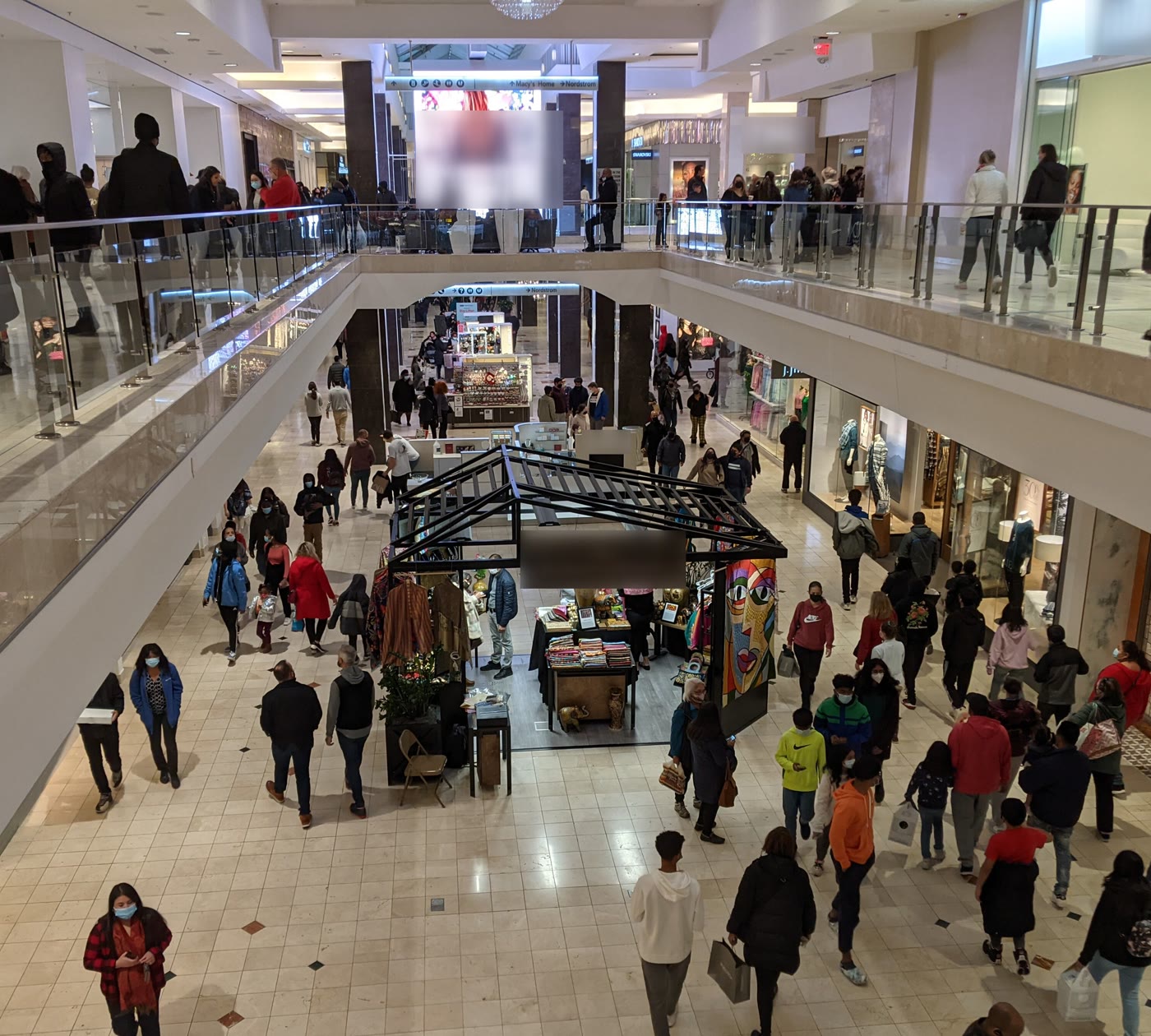
Photo: Black Friday shoppers at Westfield Montgomery mall in Bethesda, Maryland, in 2021. G. Edward Johnson / CC BY 4.0, via Wikimedia Commons. Store signs blurred.