They said the lights would go out today. What would you do if they actually did?
There was no blackout today. But Spain went dark last year and Texas froze in 2021. Here's what happens when the power goes out, how people really behave, and how ready you are.
First: today was not a blackout
For days, posts claimed the country would lose power on Nov. 17. No agency or utility announced anything like that, and FEMA said there were no blackouts and no secret emergencies. What did happen at 2:20 p.m. Eastern was a scheduled nationwide test of the Emergency Alert System on TV and radio. Federal law requires one at least every three years.
Still, millions of people searched "blackout today." That tells you something. A lot of us weren't sure whether to believe the rumor or the government, and a lot of us realized we have no idea what we'd do without power.
It has happened, and not long ago
On April 28, 2025, the power went out across almost all of Spain and Portugal in a few seconds. Tens of millions of people lost electricity in the middle of the day. Trains stopped between stations. Traffic lights went dark. Card machines stopped working, and phone and internet service failed for many people. Stores sold out of battery radios. Most power was back by the next morning.
Here, the Northeast blackout of Aug. 14, 2003, cut power to about 50 million people in eight states and Ontario. It started with a software failure at a utility in Ohio. In February 2021, a winter storm knocked out power to millions of Texans for days in freezing weather. The state later tied 246 deaths to the storm.
Would we turn on each other?
The movie version says yes: no phones, no internet, and by night two it's the Purge. The record mostly says no. Researchers who study disasters have found for decades that panic and looting are rare and that most people help each other. In New York in 2003, people directed traffic, handed out water and slept on the steps outside their buildings.
There is a counterexample people remember. In New York's 1977 blackout, during a summer of high unemployment and crime, there was widespread looting and arson and thousands of arrests. The difference between 1977 and 2003 wasn't the darkness. It was how much people trusted the city and each other going in.
Why one day offline scares us
Our money, maps, work, news and family group chats all run through one device that needs power and a signal. Cell towers have batteries and generators, but in a long outage some go dark. Most of us don't know a single phone number by heart, carry cash, or own a radio. None of that is a personal failure. It's how daily life got built over the last 20 years, with the backups left out.
How to be ready for 72 hours
FEMA's list is short. Water: one gallon per person per day, for several days. Food that doesn't need cooking. Flashlights and extra batteries instead of candles. A battery or hand-crank radio. A charged power bank. Some cash, because card readers go down. The numbers that matter written on paper. Keep the fridge closed: food stays cold about four hours, a full freezer about 48. If you use a generator, keep it outside and away from windows. And if someone in your home relies on powered medical equipment, plan for that first.
What would actually help
Grids that can isolate a failure before it spreads. Neighborhood centers with backup power where people can charge phones and get information. Officials who answer rumors quickly and plainly, so people aren't left choosing between a viral post and silence. And knowing the people on your street before you need them.
Nobody should have to wonder whether their neighbors would turn on them in the dark. The way to make sure they won't is to build trust before the lights go out, not after. Would you be okay for three days? Tell us what's in your kit.
- USA TODAY Network, Nov 17, 2026: alert test time, TV and radio only, FEMA statement, legal requirement
- Fact check: "Nov. 17 blackout": no blackout announced
- 2025 Iberian Peninsula blackout: date, scale, trains, payments, restoration
- Northeast blackout of 2003: 50 million people, cause
- 2021 Texas power crisis: outages, state death count
- New York City blackout of 1977: looting, arson, arrests
- Ready.gov: Power outages and Build a kit: preparation list, fridge and freezer times, generator safety
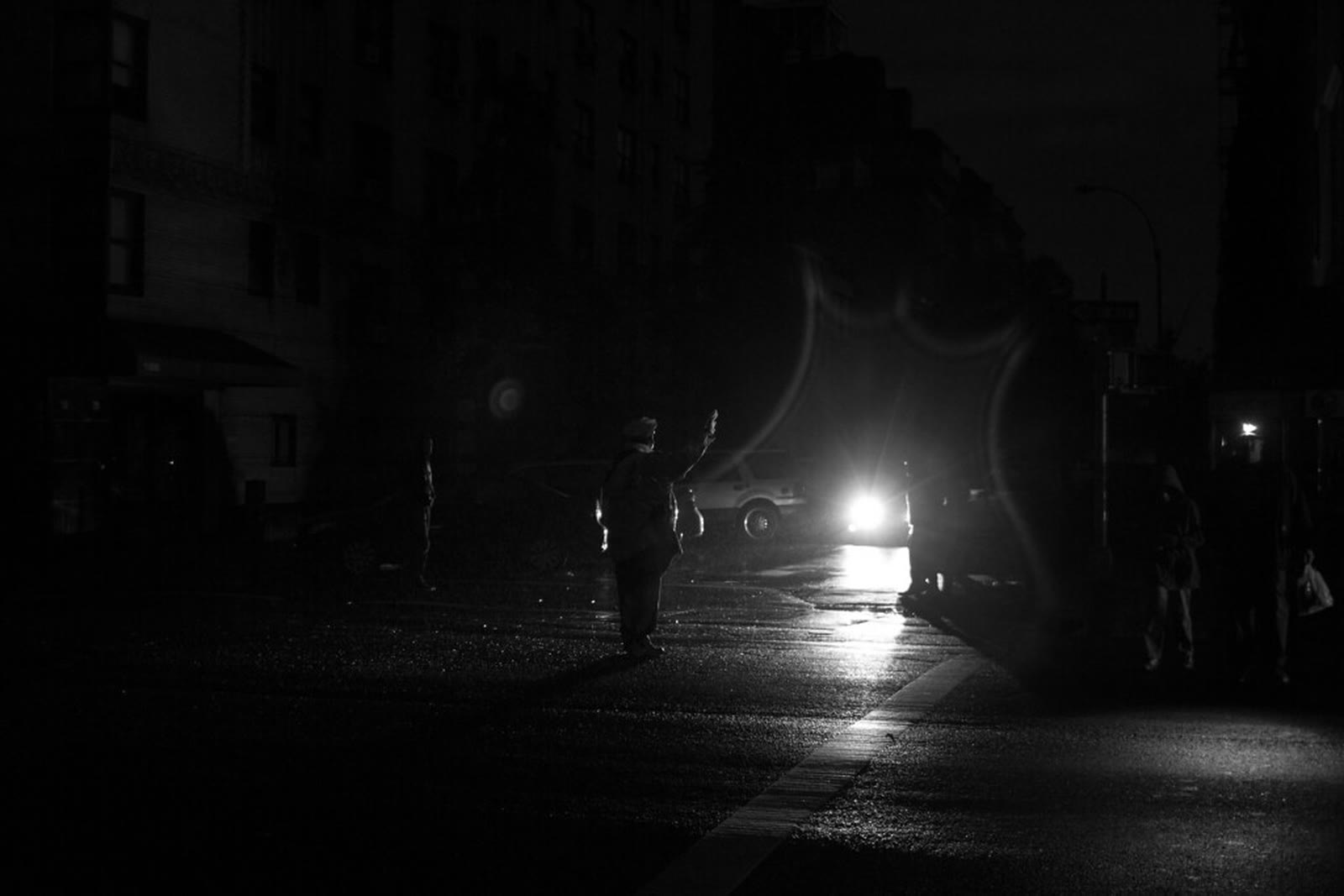
Photo: A New York street during the Hurricane Sandy blackout, Oct. 30, 2012, by Ivan Zuber, CC BY 2.0.