Wednesday, the Supreme Court hears whether states can ban AR-15s. About a dozen states could be affected.
Challenges to bans in the Chicago area and Connecticut go before the justices Dec. 2. Here is what each side argues, and why the case could vanish before a ruling.
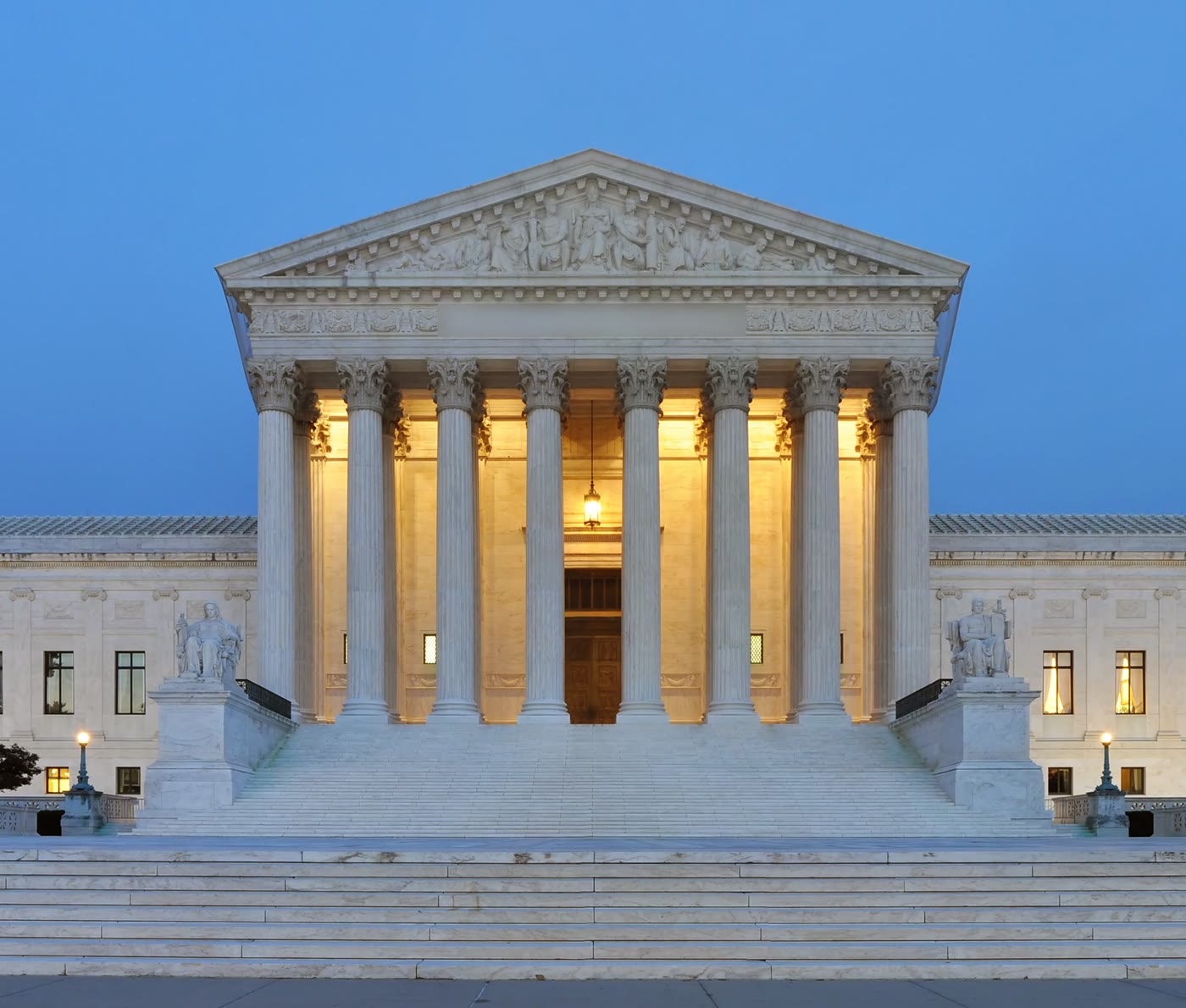
On Wednesday, the Supreme Court will hear arguments on a question gun owners and gun-control advocates have been fighting over for decades: can a state ban AR-15-style rifles?
The answer could reach about a dozen states and Washington, D.C. Or the case could disappear before the justices ever rule.
The question
The justices put it in one sentence: “Whether the Second and 14th Amendments guarantee the right to possess AR-15 platform and similar semiautomatic rifles,” according to the case docket on SCOTUSblog.
It is the Court’s first full hearing on what supporters call “assault weapons” bans, and what opponents call bans on the most popular rifles in America.
The two cases
The Court combined two challenges into one argument, with one hour set aside for both, SCOTUSblog shows:
- Cook County, Illinois: a ban on AR-15s and similar semiautomatic rifles in the Chicago area, first passed in 1993, the Associated Press reported in coverage carried by PBS NewsHour.
- Connecticut: a similar ban passed after the 2012 Sandy Hook school shooting, where the gunman “used an AR-15 to kill 26 children and educators,” the AP reported.
Lower courts upheld both laws.
Who it could affect
Similar laws are in place in about a dozen states, covering major cities like New York, Los Angeles and Washington, D.C., the AP reported. Congress let a national ban expire in 2004. States have kept passing their own, including recent measures in Virginia and Rhode Island.
A broad ruling either way would shape what those laws can do.
What the challengers say
Gun-rights groups argue the rifles are owned legally by millions of Americans, and that the Constitution protects guns in common use.
“The Second Amendment protects arms in common use for lawful purposes,” Adam Kraut of the Second Amendment Foundation told the AP. He said the AR-15 “potentially outnumbers Ford F-150 trucks in America.”
The challengers told the Court: “If the Second Amendment does not protect the most popular rifles in the country, it is hard to see how it protects any firearms at all,” beyond handguns at home.
What the states and county say
Supporters of the bans argue the rifles are a preferred weapon of mass shooters, close to military weapons, and can be restricted.
“These laws are critical public safety measures, and they are consistent with the Second Amendment,” said Janet Carter of Everytown Law, the AP reported.
Cook County’s lawyers argued the ban “does pass constitutional muster.” They wrote: “The trauma that assault weapon massacres have inflicted on the public at large has been staggering.”
How we got here
In 2022, the Court issued a landmark ruling that expanded Second Amendment rights, and since then it has both struck down and upheld gun laws, the AP reported. It upheld a law barring people under domestic-violence restraining orders from having guns. This past term, it struck down a Hawaii law that required permission to carry guns into stores and hotels, and a broad federal ban on gun ownership by marijuana users.
Four conservative justices had signaled it was only a matter of time before the Court took up rifle bans, the AP reported. The Chicago-area petition was filed in August 2025 and was set aside again and again at the justices’ private conferences for months before the Court agreed on June 30 to hear it, SCOTUSblog’s docket shows.
Bloomberg Government reported that Chief Justice John Roberts and Justice Amy Coney Barrett will likely cast the key votes.
The twist: the case might vanish
Two things happened in the last month that could change the case.
First, the lead challenger dropped out. Cutberto Viramontes asked to be removed from the case, and the Court agreed on Nov. 23, SCOTUSblog shows. The case is now listed under another challenger’s name, Khaya v. Cook County.
Second, Cook County told the Court on Nov. 5 that the case is moot, meaning there is no live dispute left to decide. The challengers pushed back. On Nov. 24, the Court put off deciding whether to dismiss it until after Wednesday’s argument.
That means the justices could hear the whole argument and still throw out the Cook County case. The Connecticut case, Grant v. Higgins, was argued alongside it and would remain.
The federal government is in it too
The U.S. government filed its own brief in September and was granted time to argue on Nov. 9, the docket shows. The docket entries do not say which side it supports.
Many others filed briefs, including states on both sides, the NRA, Gun Owners of America, Giffords, Brady and Everytown.
When we’ll know
Wednesday is just the argument. A decision is expected by the end of June 2027, Bloomberg reported. Until then, every state ban stays in place.
What to listen for Wednesday
- “Common use.” Whether the justices treat how many people own a rifle as the deciding question.
- History. Since 2022, gun laws have been judged largely against the nation’s history of gun regulation. Watch which history each side points to.
- Mootness. Whether the justices seem ready to drop the Cook County case, and decide only Connecticut’s.
- Roberts and Barrett. Their questions may signal where the Court lands.
Forward
Few issues split the country like this one, and both sides are arguing from real fears: of mass shootings on one side, of losing a constitutional right on the other. Whatever the Court decides, the ruling will set the rules for millions of gun owners and for every state trying to prevent the next shooting. Listening to the best argument from the other side is a good place to start.
Where do you land: should states be able to ban AR-15-style rifles? Tell us why, respectfully. 👇
- SCOTUSblog case file: question presented, docket, mootness filings, argument time
- PBS NewsHour (AP): the two laws, states with bans, quotes from both sides
- Bloomberg Government: Dec. 2 argument, key votes, ruling by June
- ABC11 (AP): the grant
Photo: The U.S. Supreme Court building at dusk. Joe Ravi / CC BY-SA 3.0, via Wikimedia Commons.