Nearly 900,000 homes lost power on Thanksgiving. Some lost their water too.
A coastal storm with gusts up to 70 mph knocked out power from Virginia to New Jersey. For families on electric well pumps, including ours, no power meant no water.
The turkey was in the oven. Then the lights went out.
A powerful coastal storm tore up the East Coast on Thanksgiving Day, knocking out power to nearly 900,000 homes and businesses by Thursday evening, according to NBC News, citing the tracking site PowerOutage.us.
For millions of families, that meant cold ovens, dark dining rooms and a holiday spent waiting for a repair truck. For some, it meant something worse: no water at all.
How big was it
The number kept climbing all day. Around 10 a.m., about 520,000 customers were in the dark, NBC reported. By early afternoon it was more than 700,000. By about 5:30 p.m., it was nearly 900,000.
As of 4:06 p.m. Eastern, Reuters broke it down by state:
- Virginia: more than 174,000
- Maryland: more than 172,000
- Pennsylvania: almost 170,000
- Missouri: more than 117,000
- New Jersey: more than 91,000
- Delaware: more than 20,000
- North Carolina: nearly 16,000
By evening, Pennsylvania had passed Virginia as the hardest-hit state, with more than 215,000 customers out, NBC reported. In the Washington area, more than 160,000 were without power, according to the Capital Weather Gang, as cited by NBC.
A “customer” is a home or business on a power bill, not a person. Each one can be a whole family. So the number of people who spent Thanksgiving without power is likely far higher than 900,000.
What hit them
Wind, mostly. The National Weather Service reported or forecast gusts of 50 to 70 mph across parts of Virginia, Maryland, Delaware, New Jersey, New York and coastal New England, Reuters reported. Gusts topped 60 mph in Delaware, North Carolina, Virginia and West Virginia by late morning, bringing down trees and power lines, NBC reported.
In New York, Central Park gusted to 48 mph around 12:20 p.m. LaGuardia Airport clocked 56 mph in the afternoon.
Rain soaked the ground first, which made it easier for wind to rip trees out by the roots. Utilities had warned about exactly that, Reuters reported.
Water where it shouldn’t be
On the coast, the storm piled ocean water onto already-high “king tides.” Some places saw water levels higher than during Superstorm Sandy in 2012, NBC reported:
- Wachapreague, Virginia: 9.94 feet, a foot and a half above its Sandy level
- Cape May, New Jersey: 9.41 feet, tying its record
- Atlantic City: 8.28 feet, the highest since Sandy
Virginia closed the Chesapeake Bay Bridge-Tunnel and the James River Bridge. People paddled kayaks down flooded streets in Norfolk. New Jersey declared a state of emergency on Wednesday night, and New York Gov. Kathy Hochul declared one for New York City, Long Island and Westchester.
And no water where you need it
Here is the part most coverage skipped.
More than 43 million Americans, about 15% of the country, get their drinking water from a private well, according to the U.S. Geological Survey. The EPA puts it at more than 23 million households.
Most of those wells use an electric pump. When the power goes out, the pump stops, and so does the water. No faucet. No shower. No flushing the toilet after the first one. No washing the Thanksgiving dishes. The National Environmental Health Association tells well owners to switch to a safe source, like bottled water, for drinking, cooking and bathing during an outage.
That includes America House. Our house runs on a well. When the power went out on Thursday, the water went with it.
For families on wells, a power outage is also a water outage, and it lasts exactly as long as the power does.
There is also a safety issue. Michigan’s state well guidance warns that a well system loses pressure during an outage if faucets are opened, and that pressure is part of what keeps contaminants out. NEHA advises having well water tested at a certified lab after an outage, especially if the well was flooded.
Planes, too
Air travel took a hit on one of the busiest weeks of the year. FlightAware counted 417 U.S. flight cancellations on Thursday and about 1,800 delays by the afternoon, Reuters reported. By evening, delays topped 2,000, NBC reported. Washington-area airports, including Reagan National, BWI and Norfolk, were among the hardest hit. United, Delta, Southwest and American let some travelers rebook for free.
Not just the East Coast
In the Midwest, the same system dropped heavy, wet snow. St. Louis got 7.3 inches, and Ste. Genevieve, Missouri, got 14, NBC reported. The utility Ameren warned that restoring power around St. Louis could take “multiple days.”
In New York City, the storm was strong enough to move the 100th Macy’s Thanksgiving Day Parade to Saturday, the first weather postponement in its history.
What officials said
“There is no destination worth risking your safety,” New York City Mayor Zohran Mamdani said, NBC reported.
Hochul urged New Yorkers to “stay prepared, stay alert, stay informed and stay vigilant as this storm brings heavy wind gusts and strong rainfall this Thanksgiving.”
No deaths had been reported in the coverage we reviewed as of Thursday evening.
If your power is still out
Officials repeat the same advice every storm, because people get hurt every storm:
- Generators go outside only. The CDC says: “Never use a generator or other gasoline-powered engines inside your home.” Not in the garage, not in the basement, not with a window open. Ready.gov says to keep it at least 20 feet from windows, doors and attached garages.
- Watch for carbon monoxide. It has no color or smell. Headache, dizziness, nausea and confusion are warning signs. Call 911 or Poison Control at 1-800-222-1222.
- Never heat your home with a gas stove or oven.
- Food: a closed fridge keeps food cold about 4 hours. A full freezer lasts about 48 hours, a half-full one about 24.
- On a well: use stored or bottled water, and get the water tested if the well flooded.
- Stay away from downed lines. Assume every one is live.
What happens next
Winds were expected to ease on Friday, with gusts of 25 to 35 mph, Reuters reported. But wet ground and weakened trees mean more can still come down. Utilities had not given clear restoration times for most of the East Coast as of Thursday evening.
Forward
A Thanksgiving blackout is a reminder of how much of daily life runs through one wire. For families on wells, it is two utilities at once. A few gallons of stored water, a working carbon monoxide detector and a plan for the fridge can turn a ruined holiday into an inconvenience. And if you own a well, it is worth asking: what would it take to keep your pump running when the grid goes down?
Did you lose power, or water, this Thanksgiving? Tell us how long it lasted.
- NBC News live coverage: outage totals through the day, gusts, record water levels, flights, quotes
- Reuters, via AOL: outages by state at 4:06 p.m., gusts, FlightAware counts, Friday outlook
- U.S. Geological Survey: 43 million people rely on private wells
- EPA: 23 million households on private wells
- National Environmental Health Association: well owners during power outages
- Michigan well fact sheet: well pressure and contamination during outages
- CDC: generator and carbon monoxide safety, food
- Ready.gov: generator distance, outage preparation
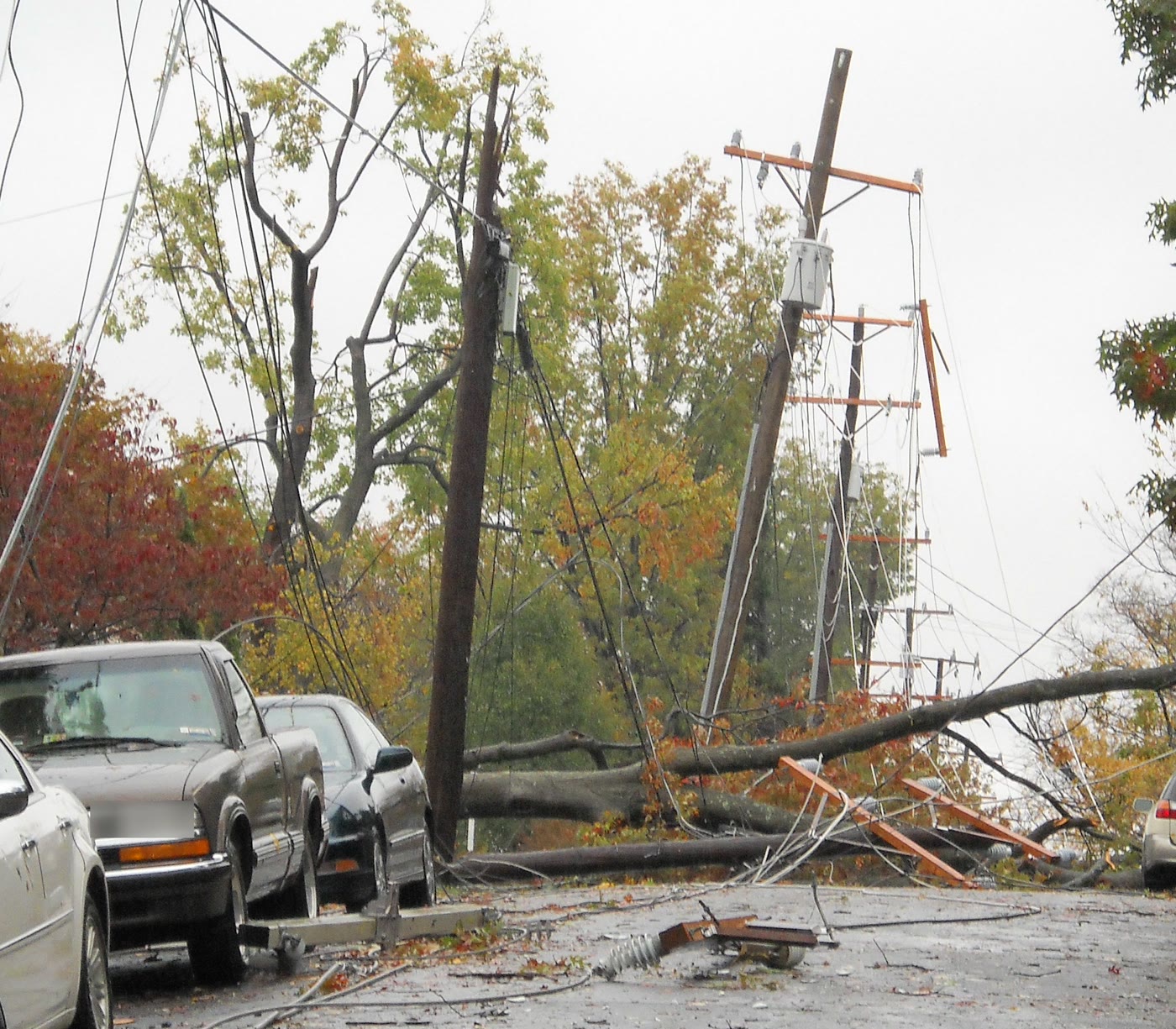
Photo: Downed power lines and trees on a residential street in Arlington, Virginia, after an earlier storm (Sandy, 2012). Arlington County / CC BY-SA 2.0, via Wikimedia Commons.