Hackers got into the Air Force’s cloud. It runs pay, radar and bomb tracking.
Reuters reports intruders breached Cloud One, the Air Force’s flagship computing platform. No one has said who did it, how deep they got, or what they took.
First the spy agencies. Then the Treasury. Now the Air Force.
Hackers have broken into Cloud One, the U.S. Air Force’s flagship cloud computing platform, three people familiar with the matter told Reuters in an exclusive report published Friday. Cloud One runs the systems behind Air Force pay, personnel, logistics and maintenance, along with tools tied to air defense radar and the tracking of bombs and missiles.
No one has said who did it, how far they got, or whether they took anything.
What Cloud One is
The Air Force launched Cloud One in 2017 as a “one-stop shop” for its computing, Reuters reported. Instead of every office running its own servers, applications move onto one shared platform built on cloud services from four of the biggest tech companies in the world: Microsoft, Amazon, Oracle and Alphabet, Google’s parent company.
Two sources described it to Reuters as among the U.S. military’s biggest cloud platforms. It powers “scores of applications.”
The contractor running it changed recently. SAIC was the prime contractor until 2025, when Leidos took over, Reuters reported.
What runs on it
According to Reuters, Cloud One hosts:
- Personnel and pay: applications that manage Air Force personnel data and pay.
- Logistics and maintenance: the systems that track parts, supplies and aircraft upkeep.
- Cloud-Based Command and Control: a system that pulls together air defense radar and other data feeds from across North America.
- Theater Integrated Combat Munitions System: a system that tracks bombs and missiles at more than 200 Air Force locations around the world.
Reuters said the breach could put “a vast swathe of sensitive tactical, personnel and logistics data” at risk.
“A breach here is a big deal,” one source told Reuters.
How it was found
The intrusion was discovered “within the past month or so,” during work to upgrade the system, two of the sources said.
One source said the hackers used a software flaw to reach what is called the control plane, the part of the system that manages everything else. That source compared it to a “universal remote.” In theory, access like that could let intruders check the status of military aircraft or follow the movement of spare parts, Reuters reported. It is not clear whether the hackers did either.
Investigators called in U.S. Cyber Command to assess the damage, one source said.
What it broke
The discovery has caused disruption across the platform, according to Reuters:
- Moves paused: the effort to move more back-office applications onto Cloud One, a long-time military priority, has been put on hold.
- Fixes blocked: updates to applications already on Cloud One have been blocked. That means staff cannot install fixes for a new batch of serious software flaws disclosed across the tech industry, at exactly the moment those fixes matter.
- Access pulled: some users had their administrator rights revoked, a fifth source said.
What we don’t know
Reuters could not establish:
- Who the hackers are.
- Which software flaw they used.
- How deep they got.
- Whether any data was stolen.
Five sources in total spoke to Reuters, all on condition of anonymity. No official has confirmed the breach on the record.
What the Air Force said
The Air Force did not confirm or deny it. In a statement to Reuters, it said it “does not comment on the security posture, vulnerabilities or operational status of specific networks and systems.”
“We continuously take prudent measures to protect Department (of the Air Force) information, systems and mission capabilities,” the statement said.
Former contractor SAIC did not respond to Reuters. Leidos sent questions to the Air Force. Cyber Command did not respond.
“100% success rate”
Three years ago, the people running Cloud One were confident. In a 2023 commentary carried by FedScoop, Cloud One’s leadership claimed a “100% success rate” at beating back what they called a “staggering” number of hacking attempts.
“There is no room for error when it comes to security,” they wrote.
Reuters noted that Cloud One “has long been in the crosshairs of hackers.”
Not the only one
This is the latest in a run of government hacks. Reuters said the government was already dealing with at least six other recently disclosed cyber incidents, including two at the FBI, an earlier hack of Pentagon data, a leak of Homeland Security personnel information, a breach affecting at least two spy agencies, and a hack at the Treasury Department.
Earlier this week, FinCEN, the Treasury office that tracks suspicious money, announced its own intrusion on the same day the CIA confirmed a breach, which we reported on.
No link between any of these incidents and the Cloud One breach has been shown. It is possible they are separate attacks by separate groups. It is also possible we will learn otherwise.
Why it matters to you
Most people will never log in to Cloud One. But it holds pay and personnel data for Air Force members, and it supports systems that help defend North American airspace. If the intruders read personnel files, service members and their families could be targets for scams or identity theft. If they reached operational systems, the risk goes beyond paperwork.
And when one shared platform holds this much, one break-in can reach a lot of it.
What to watch
- Who did it. Any attribution by the Pentagon, Cyber Command or allies.
- What was taken. Whether personnel or pay data was copied, and whether service members get breach notices.
- Congress. Whether the armed services or intelligence committees call for briefings.
- The fixes. How long updates stay blocked while new software flaws are public.
Forward
Putting everything on one big cloud can be cheaper, faster and, done right, safer. But it also means one door, if it’s found, opens many rooms. The public should get a clear accounting of what was reached, at least in broad terms, without giving attackers a road map.
Should the Pentagon have to tell the public when a system this big is breached?
- Reuters, via Yahoo News: the exclusive: sources, what runs on Cloud One, discovery, disruption, Air Force statement
- CNBC (Reuters): same Reuters report, with links to the 2023 commentary
- Newsweek: what could be at risk
- FedScoop, 2023: Cloud One leadership’s “100% success rate” commentary
- America.co News: our report on the CIA breach
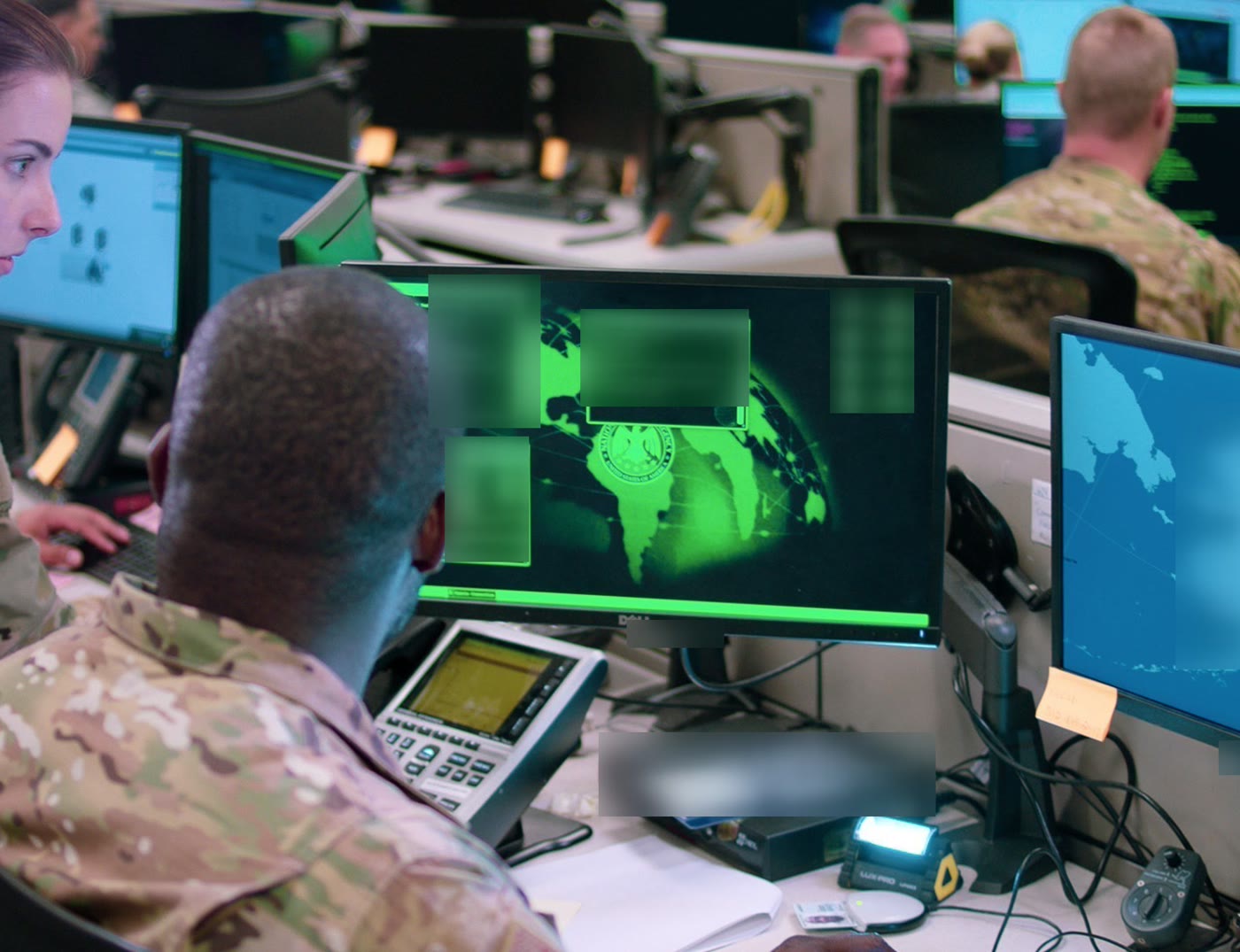
Photo: Airmen at a cyber operations floor at Port San Antonio, Texas. Maj. Christopher Vasquez, U.S. Air Force / public domain, via Wikimedia Commons. Screen text blurred.