Make the facts usable.
ImpactLine explores public spending. Vote Impact helps people follow legislation. Election.org provides public election information.
 America.co
Clear introduction. Complete strategy.
We build public tools and bring creators and builders together so Americans can understand public decisions and work on practical improvements.
Our focus: transparency, accountability and opportunity for Americans.

Committed to a public benefit corporation (PBC) structure. Filing is pending; PBC status is not yet complete.
01 / Our foundation
02 / One connected effort
Tools reveal a problem.
Creators explain it.
Builders help address it.
ImpactLine explores public spending. Vote Impact helps people follow legislation. Election.org provides public election information.
Explain a public question, show the evidence, and invite people to contribute. The creator community connects storytelling with useful work.
America Combinator is the startup partnership entry point: collaboration, feedback and distribution. Applying is not a funding commitment.
America House is a private home associated with the community—not a business address or venue for hire.
03 / Your part in it
You don’t need to join every project.
04 / The scale of the ambition
Keep the destination visible.
Make the assumptions inspectable.
eventual votes for a common-sense evolution
A planning ambition—not collected votes, measured support, or a forecast.The aim is a nationwide mandate for transparency, accountability, and opportunity. The proposed route begins with useful missions and people who earn trust through public work, then connects creators, supporters, local teams, and prospective leaders.
The number is not the method. Attention has to become informed, voluntary participation. An online follow is not a voter, a view is not an endorsement, and helping a civic project is not a promise to support a candidate.
Explore the adjustable growth modelThese are organizing targets from the existing 2026–2028 success scenario, not a count of current creators, completed missions, or established chapters.
The default assumptions produce 186.6M modeled eventual votes by November 7, 2028. Turning supporter sharing off produces 166.3M. They are alternative scenarios, not totals to add together.
The model uses 3,000 views per creator platform post; 0.5% becoming follower relationships; 45% translating into unique eligible U.S. people; 90% support; and 90% turnout. These are chosen inputs, not measured conversion rates.
Default sharing: 10% of prior-period supporters; 0.25 shares per day; 20 extra views per share. A 250M eligible-audience ceiling bounds the model. It does not model attrition, acquisition costs, state-by-state votes, or ballot access.
A national popular-vote ambition alone does not establish a presidential win. The National Archives explains the Electoral College and its 270-vote majority requirement. Registration, ballot access, candidate choice, actual turnout, and independent public-information services remain distinct responsibilities.
05 / The full Deep Dive
The short introduction explains the organization. The chapters below explain the movement: its checklist, storytelling, coordination, principles, and the part you can play. The original chapters and source credits remain here in full.
Read the complete strategy01 / The invitation
Imagine that the most compelling story on your phone was the world getting better—and there was a part in it for you.
You follow someone trying to make one real thing happen. You see the obstacle, meet the people working on it, and watch their next attempt. One day, your knowledge is exactly what they need. Another day, someone you introduce helps them cross the finish line. When they succeed, the story opens onto a larger one.
A neighborhood that knows how to help itself. Public money people can follow. Technology people can question and control. A society able to create abundance and make its benefits widely available. These are pieces of a future worth wanting. They also require people to do specific things, together, for long enough to change the conditions of everyday life.
America’s Evolution is a blueprint for organizing that work as one connected movement. The shared horizon is a flourishing future for all. The Humanities’ Checklist makes the work visible. Each flag names an outcome. Each outcome can become a continuing story. Each story can become a place where people find a useful role.
If you want that future, this is a way to give your hope somewhere to go. Bring it to a task, a team, a channel, a local chapter. Let it become something another person can build on.
The most exciting story we could tell is the one we are willing to build together.
02 / The missing piece
Someone has the skill. Someone else has the audience. A third person knows the institution that needs to change. A fourth has already solved part of the problem in another town. Too often, each sees only a small part of what the others are doing.
That separation has a cost. Teams repeat discovery work. Useful projects struggle to explain themselves. People encounter a problem, feel its importance, and leave without finding a concrete contribution. An audience can be enormous while the route from watching to helping remains almost invisible.
The missing piece is a shared structure for finding one another and staying with the work. It needs to answer a few ordinary questions: What are we trying to accomplish? Who is working on it? What is needed now? What has changed? Where should a new person begin?
We can design storytelling around those questions. A clear mission gives the story direction. Regular updates give people a reason to return. Specific invitations make participation possible. A public record helps the next person pick up where the last person left off.
This is why coordination deserves to be a central ambition. Better connections between people can improve the prospects of many different projects at once. A movement that learns how to organize can keep applying that ability to harder work.
03 / The architecture
A flourishing future is a direction large enough to hold many lives and many visions of a good life. To act on it, we need smaller outcomes whose completion can actually be recognized.
That is the purpose of the flags. “Transparency” is a principle. “Ensure UBI transparency” opens a more specific question: can people see how money is allocated, who receives it, and what reaches households? “AI Safety Clarity” asks for public requirements, defined responsibilities, and checks that people can examine. Each flag must become precise enough that supporters can challenge the plan and assess the result.
The checklist organizes ambitions by difficulty, from practical foundations toward global challenges. The lower rows matter because they build the relationships, tools, credibility, and experience that harder efforts need. A headquarters can help teams meet. A working local chapter can teach others how to organize. A useful public tool can make a much larger reform easier to understand.
Difficulty is a guide to where people can begin. The real dependencies still have to be worked out. A policy outcome may require research, a coalition, legislation, implementation, and continuing oversight. A flag should make that sequence easier to see.
The checklist stays open. There are unclaimed flags because no single group can know every prerequisite of a better future. New evidence, overlooked needs, and people closest to a problem should keep improving the map. Completing a flag means meeting its defined outcome; the effects still deserve attention afterward.
Explore the Humanities’ ChecklistA flag people can rally around
04 / The channel
A creator can make a difficult mission understandable through the people doing it. A builder can make a proposed solution tangible. An organizer can turn an interested audience into a team. Put those roles in relationship and the channel becomes a doorway into the work.
Each flag can have its own continuing story across Instagram, X, Facebook, TikTok, and wherever its community gathers. The premise is easy to follow: here is the outcome we are pursuing; here is today’s attempt; here is the next thing we need.
Daily updates can create continuity when there is real work to share. Some days the update will be a breakthrough. Others will show a test that failed, a question that remains open, or the patient work of listening to people affected. Honesty makes the story useful to participants and gives viewers something real to care about.
Every episode should offer a proportionate next step. Read the source. Review a prototype. Bring a useful skill. Join a local session. Introduce someone with relevant experience. A person should be able to contribute without becoming a full-time activist or a public personality.
Every channel also points back to the shared checklist. Someone who arrives through one story can discover other missions, understand the larger direction, and choose where they fit. The public home preserves context that a short video cannot hold.
The shape of an honest update
“We’re working toward this outcome.
Today we tried this step.
Here’s what happened.
Next, we need this contribution.”
05 / The movement
A single successful project can leave behind more than its immediate result. It can leave a tested method, a team that trusts one another, a useful tool, and people ready to help again. Those are resources the wider movement can put to work.
This is the possibility of coordinated storytelling: audiences discover connected efforts, teams share what they learn, and each completed outcome becomes an invitation into the next chapter. A story can finish while the larger story keeps growing.
Consider a team that builds a clear public spending tool. The result may help a transparency campaign explain its case. The designer who helped the tool can share a reusable interface. A creator who documented the work can introduce the campaign to interested viewers. The next team begins with something it did not have before.
That handoff has to be intentional. Publish the work in a form others can use. Credit the people who did it. Explain which effort could benefit next. Invite participation without treating anyone’s attention as something the movement owns.
The ambition is a movement of unprecedented organized participation: many independent teams, connected through a common map, making progress visible and useful to one another. Its scale will come from earning that participation, one contribution and one credible result at a time.
How one story becomes a movement
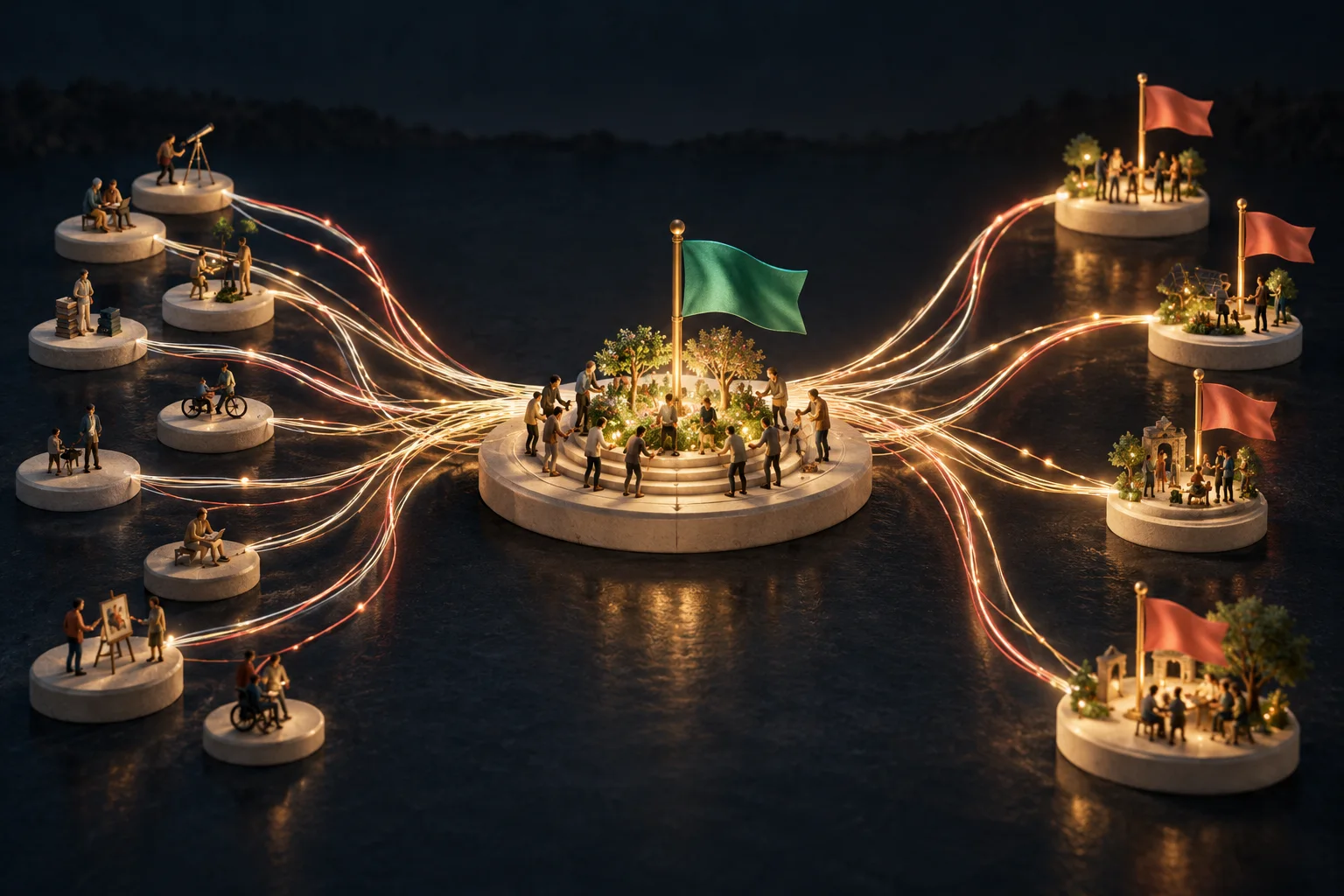
Make an outcome worth following.
Give interest a practical role.
Show the result and its evidence.
Carry people, learning, and tools forward.
06 / The practice
The future is full of possibilities, but they do not all have the same conditions behind them. People who have never met cannot yet act as a team. An idea that no one can understand struggles to attract help. A tested solution has possibilities that an untested promise does not.
We change those conditions through action. Introduce the people. Make the idea understandable. Build the first version. Test it. Publish what happened. Each step can make a next step feasible that was previously difficult to imagine.
This is the practical meaning of a “probability field” here: a way of thinking about how our choices change the possibilities available to us. Coordinated attention works through people learning, choosing, organizing, and acting.
Take an illustrative local story. A host invites neighbors to name one shared need. A storyteller documents the invitation with their consent. Someone with the right skill offers a plan. The group completes a useful task and records the result. Another neighborhood can then adapt the format instead of starting from a blank page.
The important transition is visible: strangers become collaborators; a proposal becomes an attempt; an attempt produces evidence; evidence informs the next decision. The movement grows stronger when it learns from a failure as clearly as it celebrates a success.
Viewership is an opening. Participation and outcomes are what we must learn to produce. Track them separately. Ask which invitation brought useful help, whether the work met its goal, who benefited, and what should change. That discipline is how an exciting story becomes a serious strategy.
07 / The common ground
A movement for everyone needs room for disagreement, different talents, and different reasons to care. People can share an outcome without sharing a complete worldview. Someone may arrive through faith, another through science, another through the practical needs of their family. The work can give them common ground.
The common-sense principles behind the checklist are commitments to how we work. Transparency means making decisions, money, and evidence understandable. Accountability means naming responsibilities and returning to the result. Participation means people affected have a meaningful voice. Abundance means expanding access to the resources and opportunities that help people thrive.
These principles should shape the small decisions as well as the headline goals. Explain a budget. Disclose a sponsorship. Ask before filming. Credit a contribution. Correct a claim. Give people a way to challenge a decision. Keep nonviolence and voluntary participation at the center of organizing.
Coordination can be distributed. Teams can choose methods suited to their communities while sharing a clear outcome, an honest record, and a way for others to learn. The shared page connects the work; responsibility remains visible within each effort.
A credible blueprint also welcomes existing movements. People have organized, cared, invented, and built public goods for generations. Find the teams already doing valuable work. Ask what they need. Connect their efforts where that is useful. The point is to increase our collective ability to accomplish something worthwhile.
08 / Your part in the story
The checklist contains problems that deserve sustained attention: human control over powerful technology, public accountability, material security, and the ability to live together peacefully. Working on them asks more of us than a moment of agreement. It asks for institutions, skills, relationships, and habits of cooperation that take time to develop.
That makes beginning valuable now. A functioning team today can become the foundation for a harder project tomorrow. A clear public record can save a future team months of confusion. A person who discovers they can make a useful contribution may start seeing their place in the world differently.
For anyone who wants a beautiful future, the deepest appeal of this blueprint is its invitation to act at both scales. You can serve a specific person, place, or outcome while helping develop humanity’s ability to work together. The small task and the larger horizon belong to the same story.
Bring a camera and make the work visible. Bring a skill and move a milestone. Bring an introduction and connect the people. Bring a thoughtful objection and improve the plan. Bring an outcome the checklist has missed.
The blueprint becomes real when people use it. Its credibility will grow through the quality of the work, the honesty of the story, and the lives improved along the way. That is a future worth giving our attention to—and a movement worth helping build.
Choose one flag.
Help make it real.
Open the next possibility.
The ideas behind the blueprint
This essay develops ideas from Spear Ritual and Coherence Quest into the practical structure of America’s Evolution.
Spear Ritual connects a sense of purpose with the responsibility to make useful ideas real. Its invitation is to carry compassion into action and help others recognize their agency. Coherence Quest’s The What: A Great Narrative and The How: Storyhacking explore an ambitious shared story, continuing updates, and connected goals whose audiences can support one another.
Here, those threads meet in a living checklist of outcomes, a public home for the work, and stories that invite participation. The ambition is expansive; the method can be tested one mission at a time.
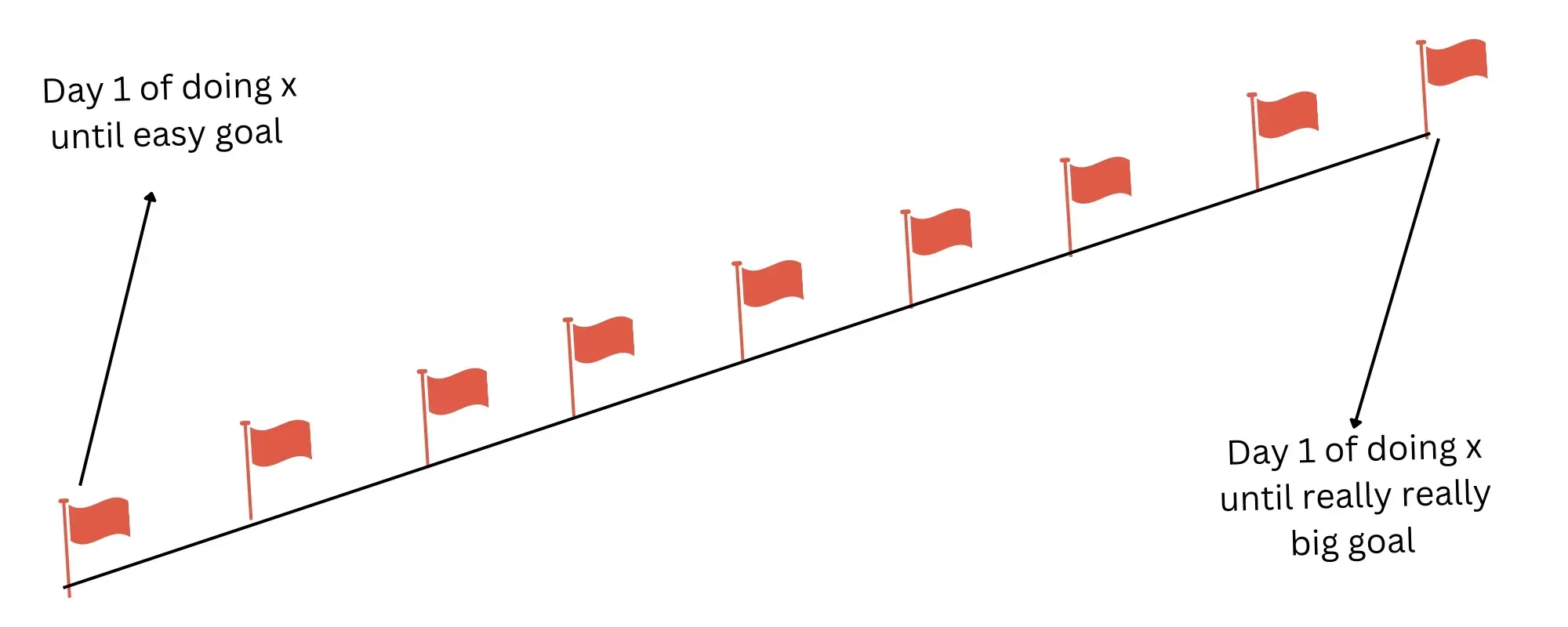
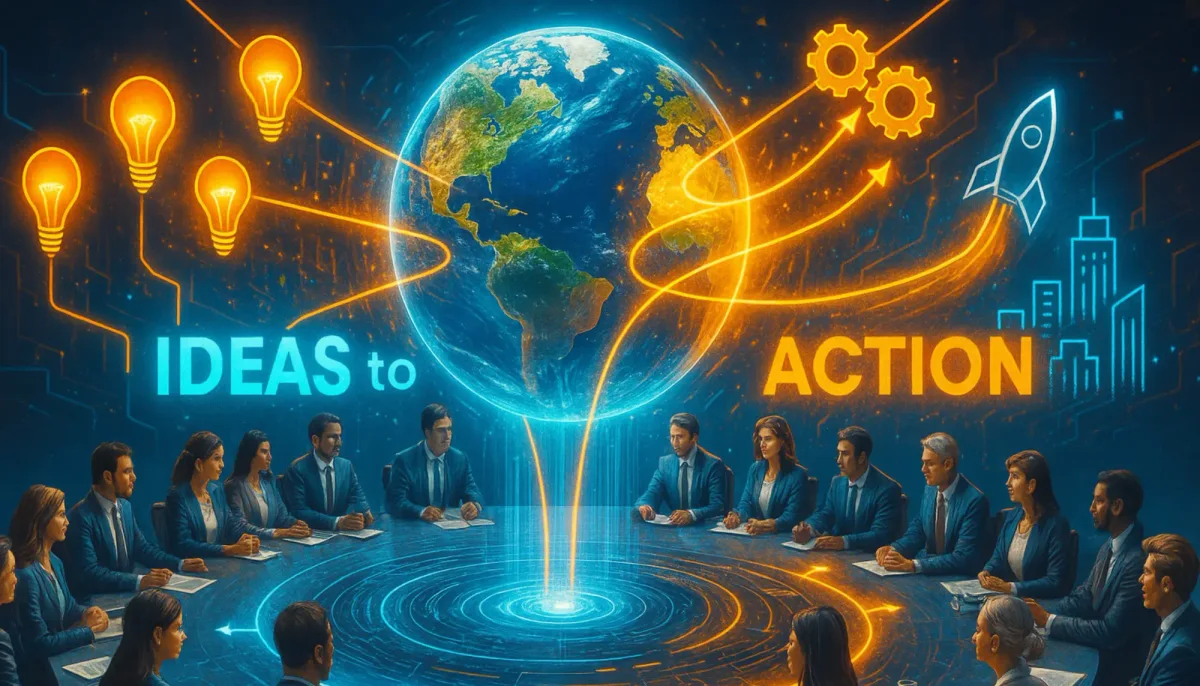
Source pages reviewed October 1, 2026. This is an original synthesis and a proposed organizing blueprint. The source essays also contain spiritual interpretations and speculative future scenarios; those remain the authors’ perspectives. The probability-field language above is a coordination metaphor, not a claim about quantum physics. Reach, participation, and outcomes must be earned and measured.
The opening landscape and the connected-missions illustration were created with AI for this essay. They depict the idea, not completed projects. The two credited source illustrations retain their original attribution. The checklist and its published statuses remain at America’s Evolution.